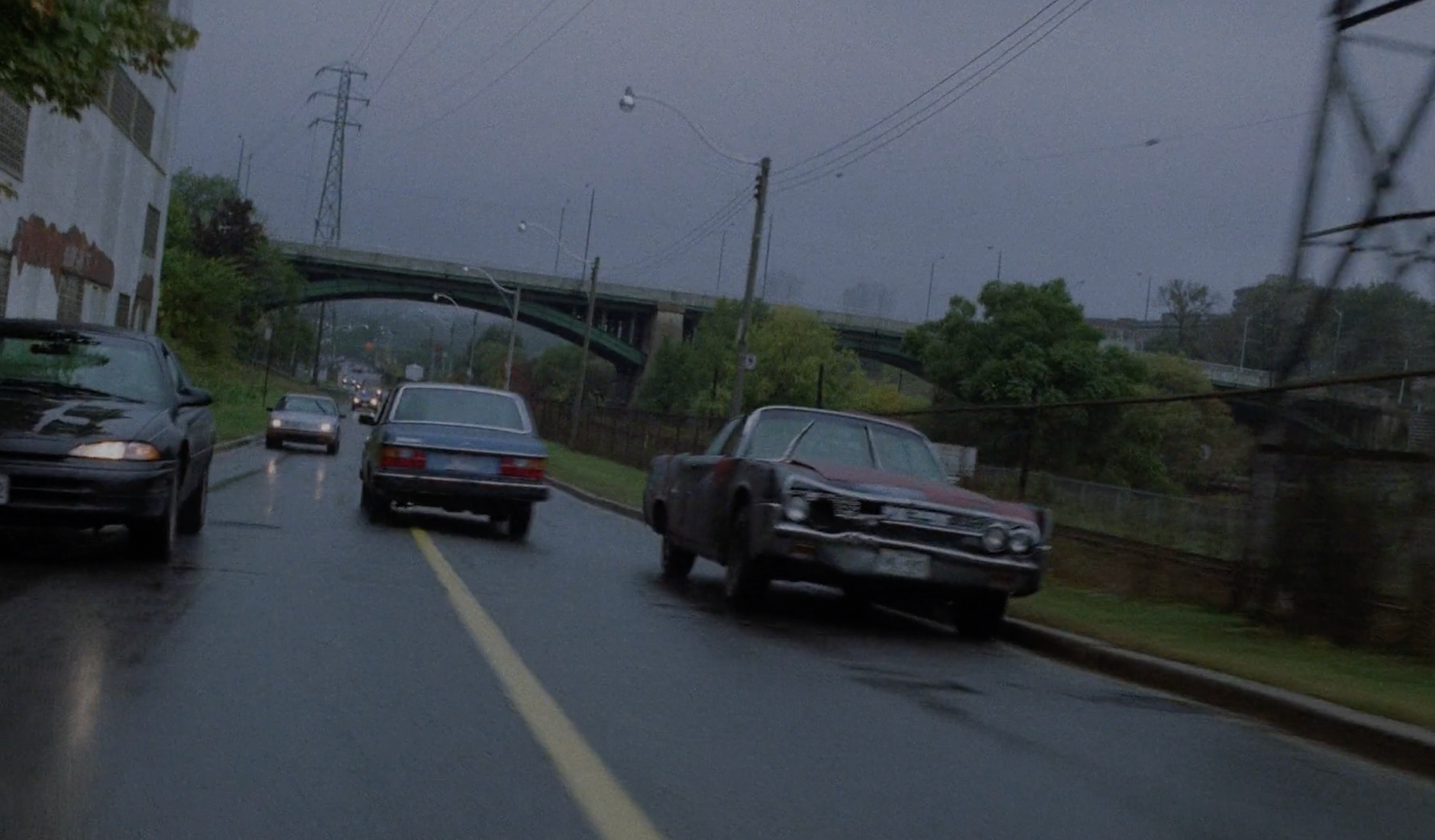
Joyride: A Memoir-Dissection of David Cronenberg's 'Crash'
Roughly three years after I lost control of my mother’s car and crashed it into a tree in the median of a two-way road, I forced myself to watch David Cronenberg’s Crash for the first time.
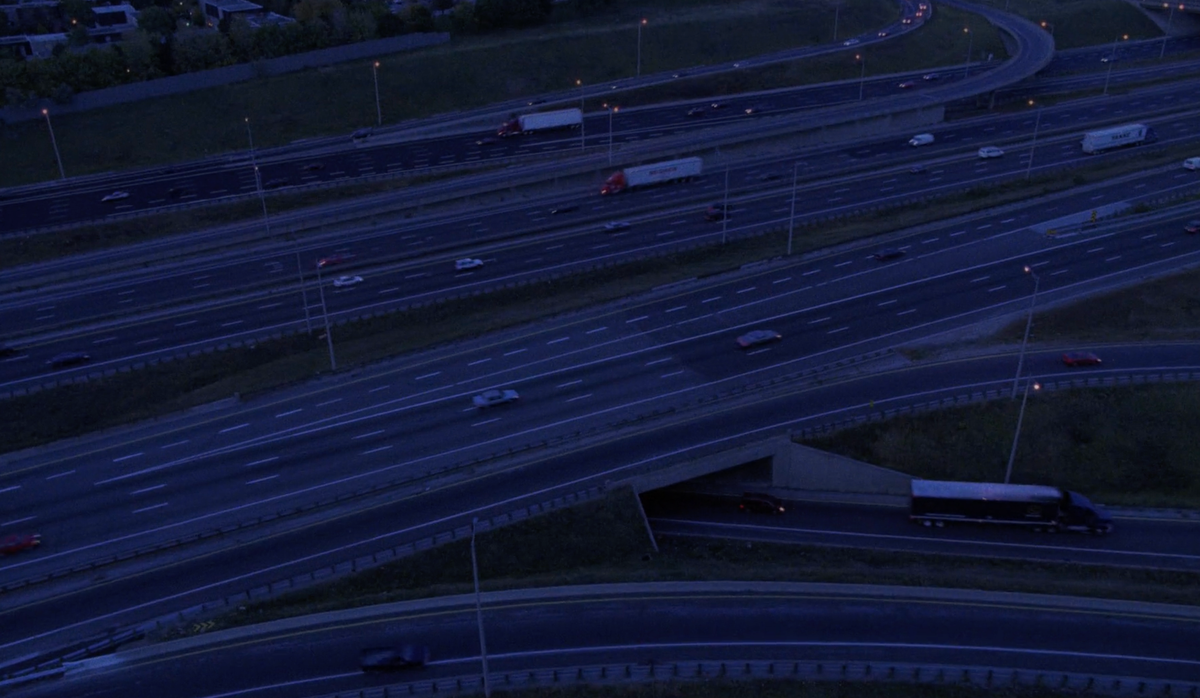
Roughly three years after I lost control of my mother’s car and crashed it into a tree in the median of a two-way road, I forced myself to watch David Cronenberg’s Crash for the first time. As a solo date, it was overdue. Roughly a decade of putting it off had atrophied into a refusal to engage with it before I was ready. Watching it, I knew, would require me to face my own accident head-on—or rather, the negative space in my memory where the accident should be.
I suspect I briefly passed out at the moment of impact. My only memories of it come from immediately before, of the car swerving and the sick bumps from below of our tires striking fallen branches. Then: the burnt rubber smell, glass everywhere, a growing horror as my mother looked at me, tried to speak, and failed; a passing jogger hauling her from the passenger seat and onto the ground; a strange woman gripping me from behind, the distant sirens wailing ever closer, as I willed my mother to wake up and realized that this was really happening, that I could not undo it, that I would never again live in a world where this was not true. I remember the attendant cop berating me over the phone outside my mother’s hospital room hours later. I remember forgetting to breathe as I stood next to my underprepared lawyer in front of a weary traffic court judge. I remember that after my charge was reduced and the fine paid, and I was stumbling with my parents back out into the sunshine, I realized my thumb had been bleeding steadily for the past hour. I had torn the skin open with the anxious rubbing of my index nail against the nail bed. But I don’t remember the crash.
I never realized how many car accidents populate the movies until I was in an accident of my own. Before, these scenes were a source of cheap drama. Now each celluloid staging and re-staging offers me a new glimpse, from every conceivable angle, of an event I cannot recall. My body wants to preserve the memory gap. I look away from the moment of impact. At my sofa cushion, my phone, my dinner plate. The brakes and tires scream. The glass smashes. People die, or don’t. Then all goes quiet except for the sirens that wail ever closer. If I look, I’ll get the memory back.
Celluloid creatures are not scared of getting back behind the wheel. If they were, the drama would halt. Having required therapy just to climb in the driver’s seat, I find this both enviable and maddening. There is something vulgar about those endless parades of vehicles swerving off roads, slamming into each other, free-wheeling on wet asphalt. Even as it happens, the characters who endure it have already moved on. The crash only matters as much as, say, a CGI explosion in a Marvel film. These people will never dissociate in a courtroom as a consequence of what they walk away from. The damage means nothing.
Not so with Crash. It’s a film preoccupied with the process of surviving a wreck, both via the development of niche sexual fetishes and the humdrum details like going to the police pound and navigating driving anxiety. “Is traffic heavier now?” Protagonist James Ballard asks. “It seems like there are three times as many cars as there were before the accident.” His survivor-in-arms Helen Remington agrees: “After this sort of thing, how do people manage to look at a car, let alone drive one?”
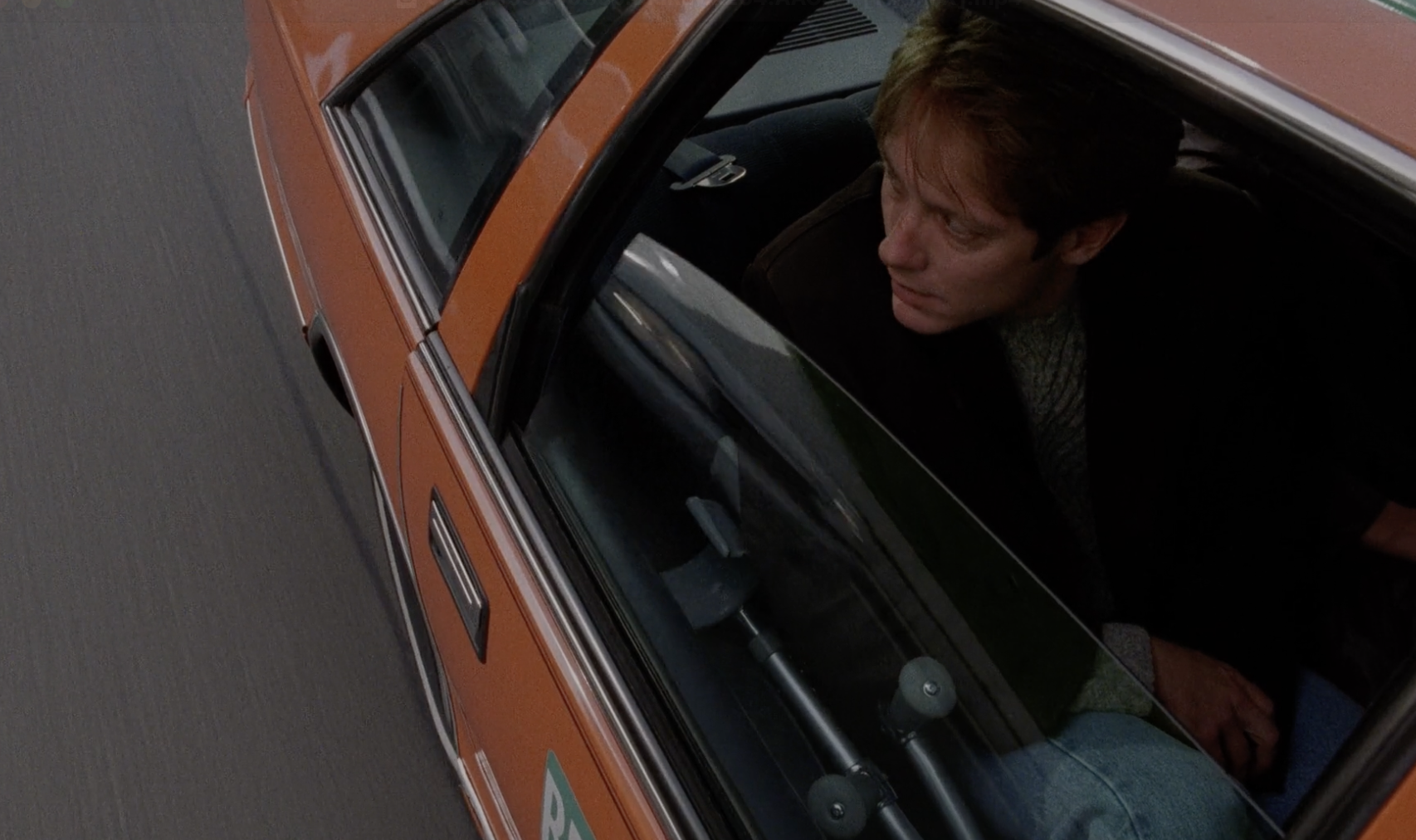
James and Helen meet in a crash, when James’s car slams headlong into Helen’s, injuring them both and killing Helen’s husband. Yet for all their anxiety, all their justifiable trauma, they consciously court danger in their first drive together. Helen doesn’t put her seatbelt on until they’re on the highway. James drives one-handed and fusses with his seatbelt, eventually tucking it under his arm. Even as the characters commiserate over the trauma of their accident, they dare it to happen again. And again. And again.
In my first viewing—after I stopped yelling at the screen to PUT YOUR GODDAMN SEATBELTS ON FOR CHRISSAKES—I read this as a story of regaining control. I needed it to be about control because my own experience had been so defined by its lack. I spent roughly six months in therapy asking how I could stop it from ever happening again. The answer: you can’t. Or rather, in the mantra repeated by my therapist, my adult driving instructor, my parents, my friends’ parents, and the man who ran the reckless driving workshop my attorney had me attend: you can’t control what the other drivers do, only what you do. Unable to get back behind the wheel in the first year following the accident, I had to rely on the skill of every other driver on the road, including whoever was ferrying me. One incident looms large. Six months after the accident, I mustered the courage to go out with a work acquaintance and her girlfriend. Reason tells me that she couldn’t have been driving more that 60 miles per hour, and yet I vividly recall watching helpless from the backseat as the speedometer climbed from 70, to 80, to 90. The posted limit was 45. I begged off the following get-togethers and eventually lost touch. I was all but a shut-in.
Instead of trying to prevent another disaster that always seems imminent, the subjects of Crash take back control by embracing the disaster’s proximity, even inviting it. You have to do something with your helplessness, Crash seemed to be telling me. Get back in the saddle and do it all right, or get back in the saddle and do it all wrong. But you have to get back in. It must feel ecstatic, I thought, to take control by relinquishing all of it. I watched the movie while squeezing a pillow to my middle so I would have something to brace myself on. Every accident felt like getting hit between the eyes with a hammer. And I journaled—unusual for me—before and after the viewing. “Funny to think,” I wrote, “that in all my years of meaning to see it, I missed my chance to do it without putting myself on the line.”
But maybe that’s the best way to watch Crash. One eye on the screen and one on my notes app, I recorded my own physical responses like a scientist using himself as a test subject: “Sensitive skin, same full-body feeling I get watching certain types of horror movies — later Saws, etc. Urge to cry, grabbing the pillows. Faint nausea. And yet there’s something sort of liberating (hate that word) to watch a movie that recognizes the car crash for what it is.”
But what is it?
To me, it was a disaster that violently put my life on pause. Only in the last year I have materially undone its damage. I have a car which I can take most places, although I can’t drive large highways yet. On my drive to work in the mornings, I can roll down the windows and sing. Crash takes a radically different view, and yet one that resonates: that the accident need not be destructive at all.
Car crash fetishist Vaughan describes the crash as “a fertilizing rather than destructive event, a liberation of sexual energy.” By the time he says it, neither James nor the audience need to question his reasoning. He—we—already saw it for ourselves when James and his wife Catherine had sex earlier. Catherine fantasizes out loud about James and Vaughan fucking, a fantasy comprised almost entirely of questions:
CATHERINE
He must have fucked a lot of women in that huge car of his. It’s like a bed on wheels. It must smell of semen…
JAMES
It does.
CATHERINE
Do you find him attractive?
JAMES
He’s very pale. Covered with scars.
CATHERINE
Would you like to fuck him, though? In that car?
JAMES
No. But when he’s in that car…
CATHERINE
Have you seen his penis?
JAMES
I think it’s badly scarred too. From a motorcycle accident.
CATHERINE
Is he circumcised? Can you imagine what his anus is like? Describe it to me. Would you like to sodomize him? Would you like to put your penis right into his anus, thrust it up his anus? Tell me, describe it to me. Tell me what you would do. How would you kiss him in that car? Describe how you’d reach over and unzip his greasy jeans, then take out his penis. Would you kiss it or suck it right away? Which hand would you hold it in? Have you ever sucked a penis? Do you know what semen tastes like? Have you ever tasted semen? Some semen is saltier than others. Vaughan’s semen must be very salty…
It’s the dirty talk of a space alien, but more importantly, it’s the weaving of a sexual fantasy that couldn’t exist without the crash(es) that brought Vaughan into their lives. Catherine gets off not only on the fantasy of her husband with a man, but the expanding possibilities of their sexual future. Nothing is concrete here: James gives only one of her questions a direct answer, but Catherine doesn’t need direct answers. She constructs her fantasy with a foundation not on a series of imagined sex acts in which Tab A is inserted into Slot B, but on a scene that might happen, could happen, and if it were to happen, would it happen like this, or like this? Its eroticism is one of potential and promise. Between them, they plant an erotic possibility, which is watered when Catherine herself has sex with Vaughan in the backseat of his car, as James drives and watches in the rearview. We watch the motions as James watches, and we think of Catherine’s fantasy: How would you kiss him in that car?
We find out, of course.
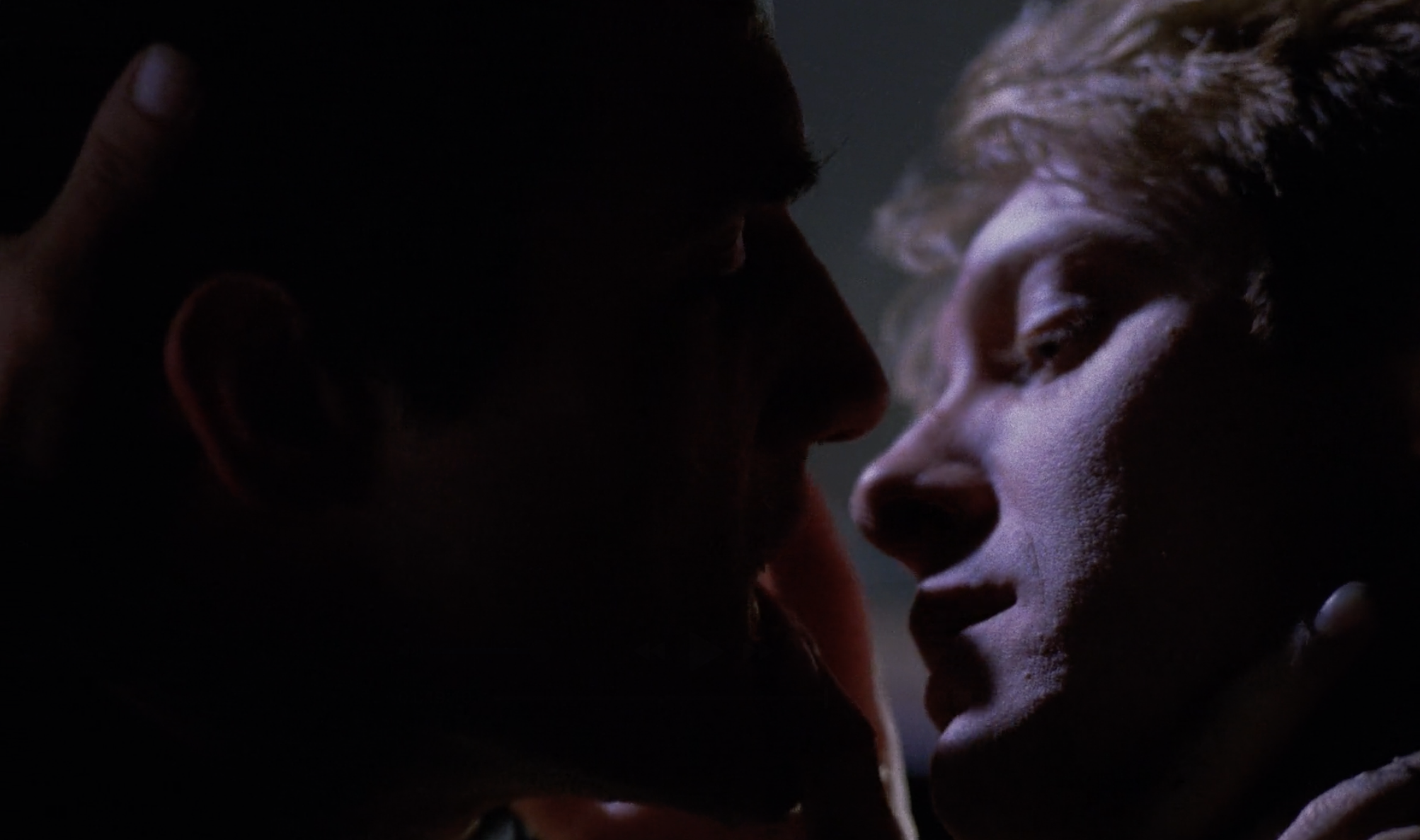
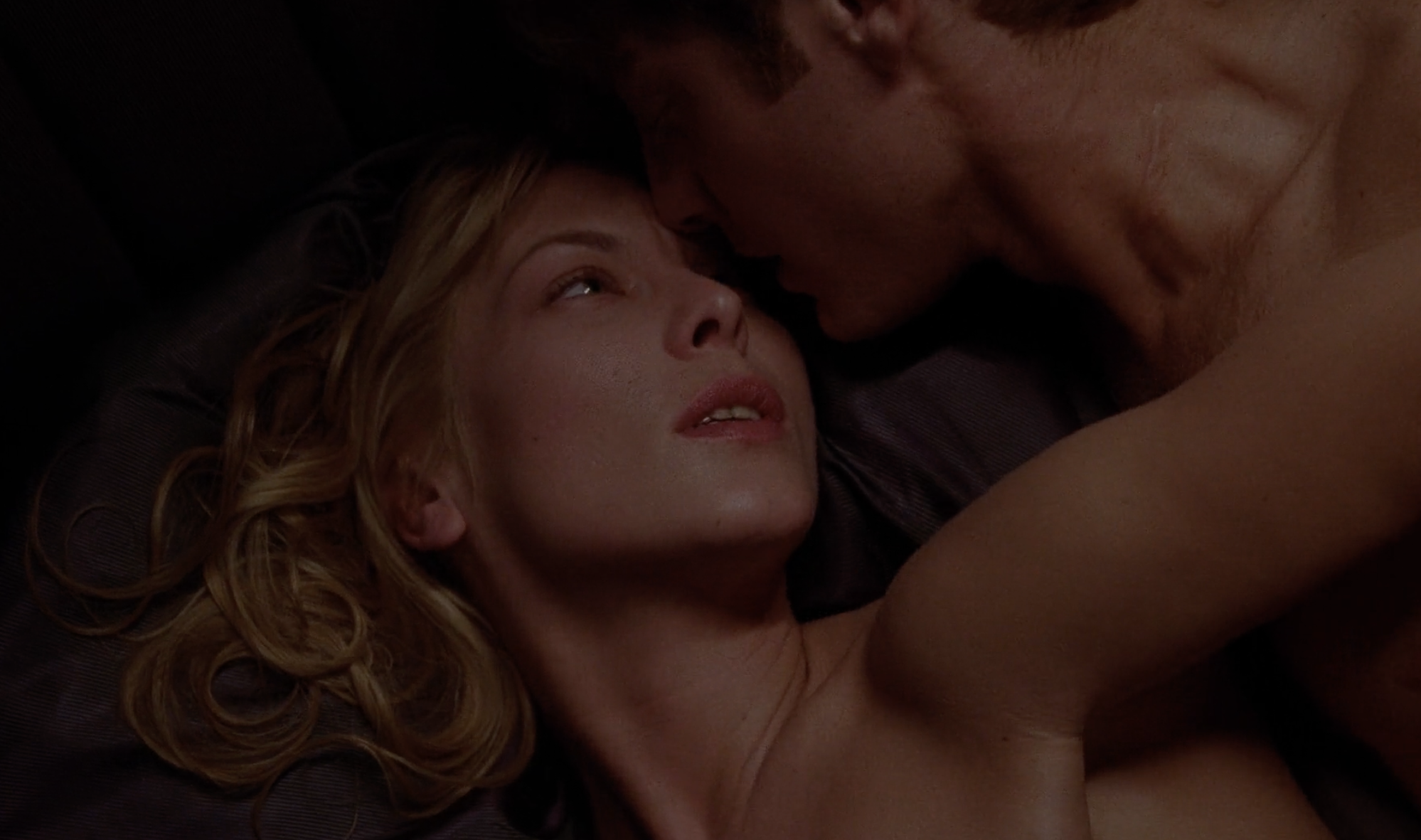
Something I find fascinating is how these three sex scenes speak to each other, the ways each person begins to stand in for all the others. Catherine fantasizes about Scene #3 before it ever happens, and as the receptive partner in Scene #2, auditions in Vaughan’s eventual role.
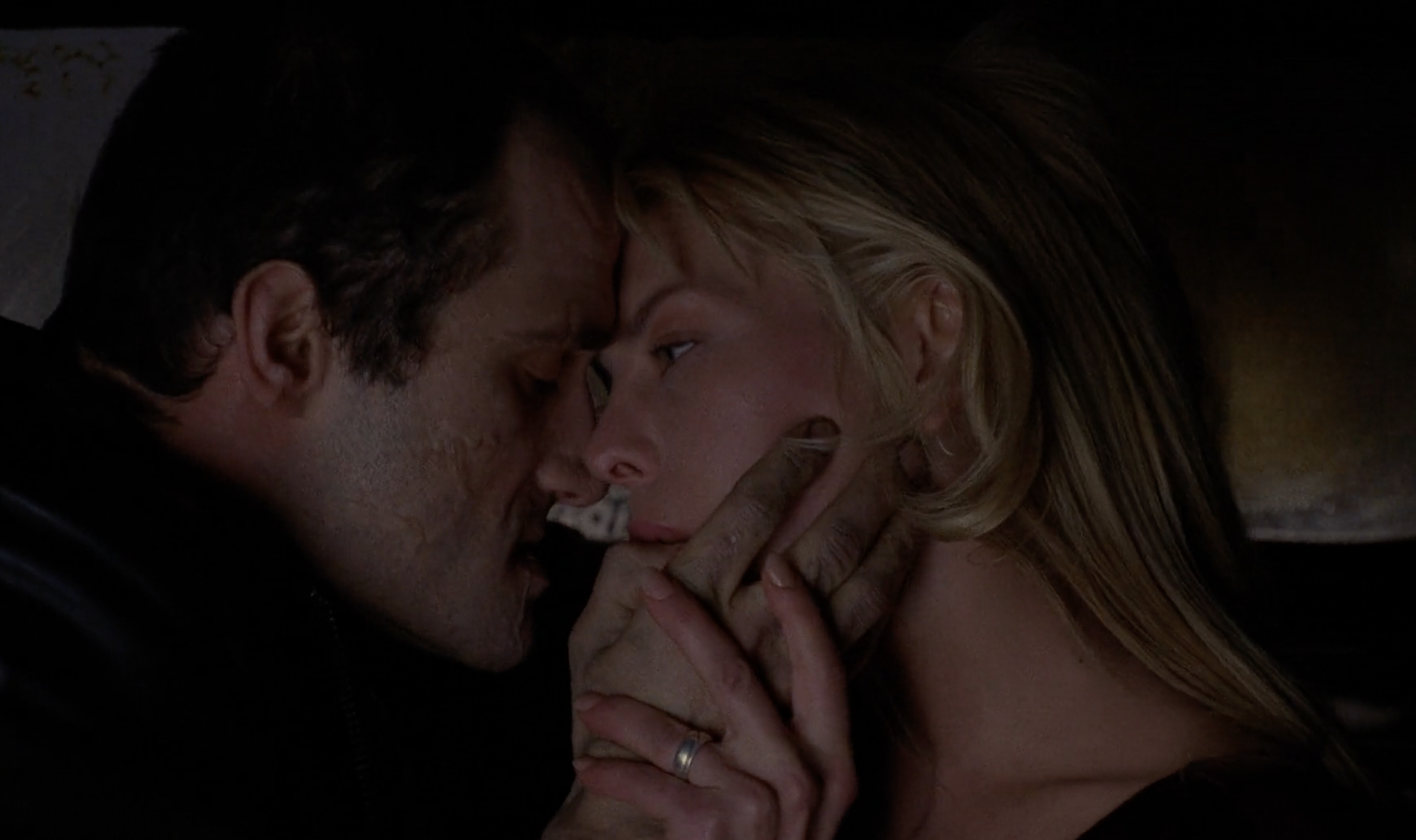
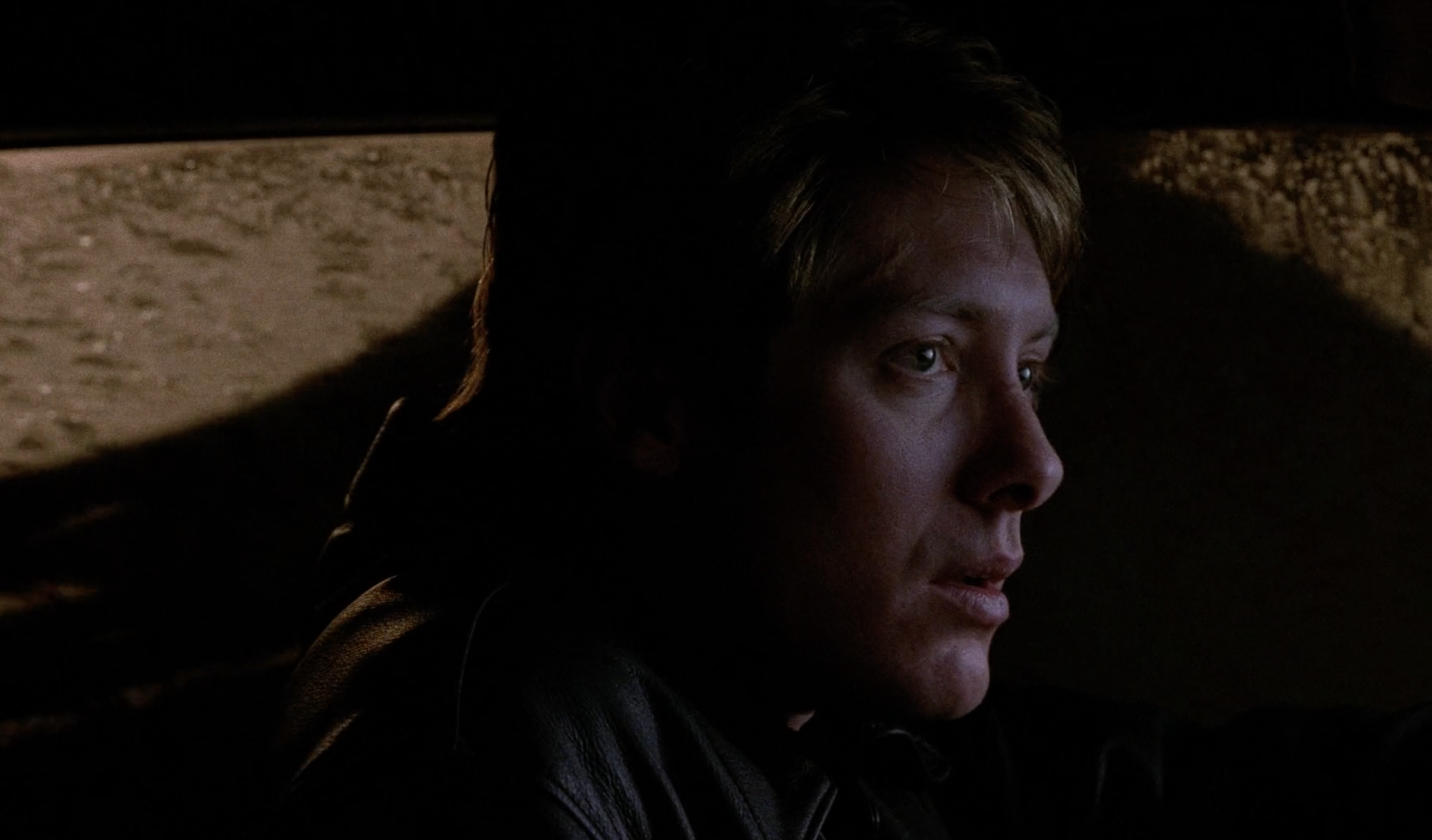
Vaughan meanwhile, in Scene #2, both assumes the place of Mr. James Ballard with Mrs. James Ballard and anticipates the role James will play with him. And finally, James—as the observing man in the driver’s seat—takes Vaughan’s place at the wheel and Catherine’s place as the erotic dreamer who acts without acting. In this way, the “crash” is the connection of two vehicles is sexual connection is the breaking-down and reformation of couples, of sexual identity, of gender, into an ever-evolving vision of pleasure at the heart of destruction. Helen Remington observes of her past sexual encounters: “They all felt like car accidents.”
I watched Crash with the intent of writing this essay about it. Hence the notes. By writing about it, I could make sense of my own responses and how the trauma of my crash sat alongside the film. The essay has taken about six months to finish, not because it requires me to think back to some especially painful days of my adulthood, although it does, but because I had ambitions to include some kind of exterior critical voice. I did try to do the reading (some articles about Crash the movie, a few about Crash the novel), but it became clear that the urge to add other voices only impeded the exercise’s point by erecting more barriers between myself and the subject—that is, me. In throwing up a hastily-grabbed citation, I was trying to take myself out from under the microscope. During the movie, I wrote in my notes: “Am I intentionally distancing myself from the feeling by documenting it? Yes.” I wanted to write the essay without putting myself in it. This is, I think, dishonest both to the project and the ethos of the film. Allow me, then, to say this:
That following my crash, it was like two realities opened. The first was the one in which my body lived, where my mother spent two days in the hospital and then came home with a mysteriously vanished knuckle and prescription for pain management. I found an attorney, took the classes and volunteer hours he advised, went to my court date, and was basically fine.
In the second reality, I killed my mother. I spent nights borrowing grief and guilt from this parallel universe, in which my father and sister never forgot my culpability. Every time news of the crash was broken to a new person, I suffered both their real reaction and what I imagined their reaction would be had the results been fatal. Two months after the accident, an extended family gathering was held. I stayed home, unable to face my mother’s parents or her sister.
Allow me to say that a year later, a family friend from England visited. After dinner, she offered her condolences for the accident, unaware that my immediate family never speaks of it, that this was probably the first time it had been brought up since the court date. Someone made some conventional reply, I don’t remember what. What I remember is my father saying after, almost under his breath: I have never been so scared.
Me too, Dad.
Allow me to say that, to keep myself grounded on the day of the accident, I kept a list of every question that was asked of me. The original list, which was written on the printout of a medical visit summary, is lost, but I remember some of the big items: How fast were you going? (Forty-five miles an hour.) Do you want to pray? (No.) Did you take your hands off the wheel at any time? (I don’t remember.) Does that hurt? (A little.) Do you have any idea of the seriousness of the situation? (I put my mom in the hospital, are you seriously going to ask me that?)
I don’t know what my crash will mean to me in a year, two years. The immediacy of the pain has gone, and when it does return, it often brings with it the surprise that it’s still relevant. Allow me to say that ultimately, I watched this film to write this essay, to make something of the crash that wasn’t my own misery. I’ve carried it this far. Here is where I set it down.
“Anyway, I feel sort of ill but I think that was good for me.”
Was the concluding thought in my notes following my first viewing. I had watched the film half-nauseous with anxiety, typing my observations with shaky fingers. Twice, I thought I might have to shut it off. And yet, by the end, something strange had happened. Even through my anxiety, I was aware of the film performing a magic trick: with each wanton repetition of destruction, each increasingly lurid sex scene inside of a car or on a car or on the sofa with car crash footage playing on the TV—the sick dread inside me would thud alongside an icy rush of adrenaline. I never ceased to be inside the cars, and yet by the end I could feel the speed of them, the wind buffeting the occupants of the rattling convertible, and an exhilarating, ferocious joy as the cars danced from lane to lane. I could smell the phantom scent of the rain on the asphalt. I don’t remember if I flinched.